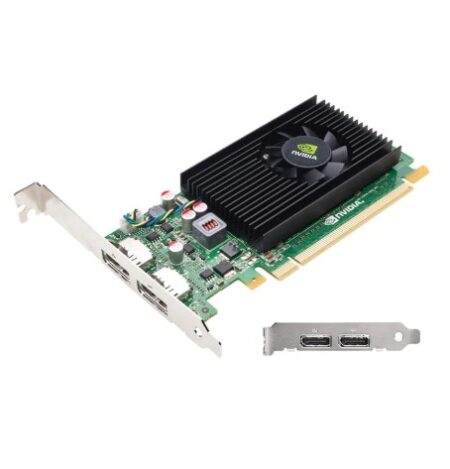
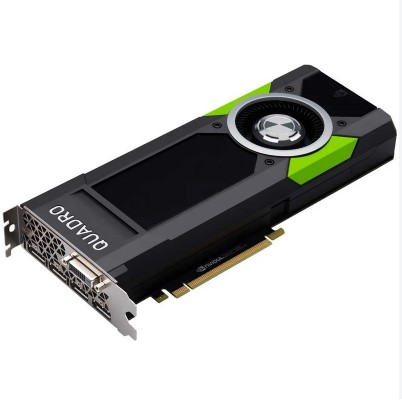
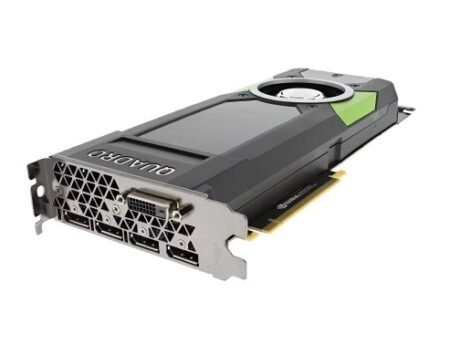
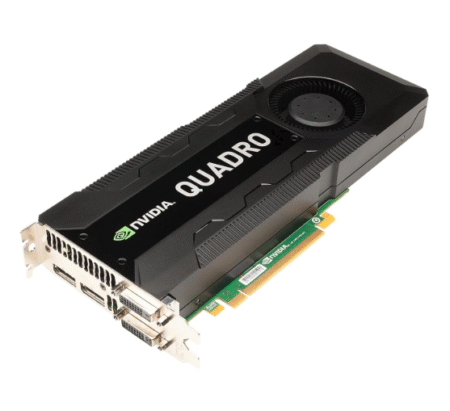
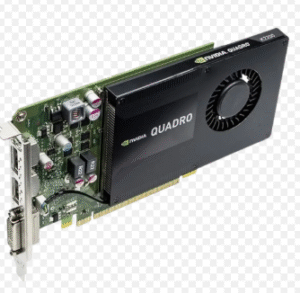
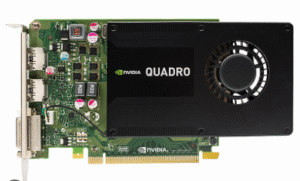
NVIDIA Quadro K2000 – Compact Professional Workstation GPU Core Specifications
Built on the Kepler GK107‑301‑A2 GPU (~118 mm², 1.27 billion transistors) using a 28 nm manufacturing process
Equipped with 384 CUDA cores, 32 TMUs, and 16 ROPs, plus two SMX units for efficient geometry processing
Operates at a GPU core clock of 954 MHz, with 2 GB of GDDR5 memory at an effective 4 Gbps (1,000 MHz on a 128-bit bus), delivering 64 GB/s bandwidth
Performance & Power
Offers approximately 732.7 GFLOPS FP32 compute performance and a texture fill rate of ~30.5 GTexel/sConsumes only 51 W TDP, requiring no external power connector—powered directly via PCIe x16 slot
Display & Form Factor
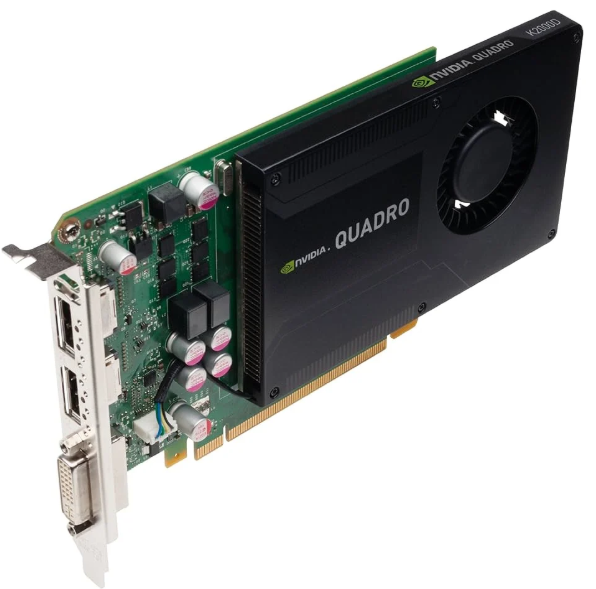
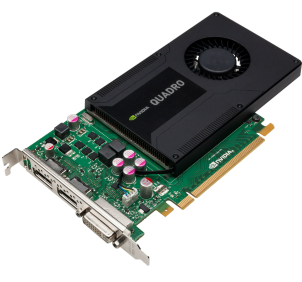
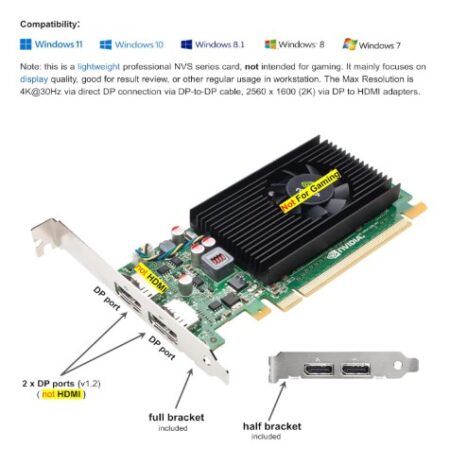
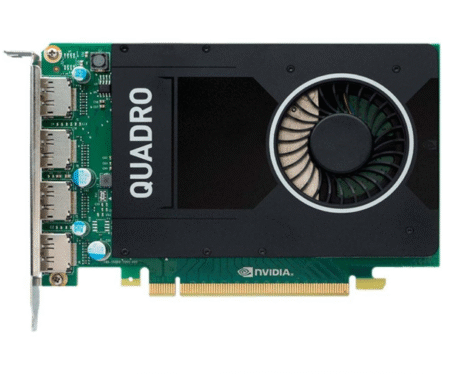
Features 1× Dual-Link DVI‑I port and 2× DisplayPort 1.2 connectors, supporting resolutions up to 2560×1600 via DVI and 4K@60 Hz via DisplayPort
Supports up to 4 simultaneous displays, thanks to DisplayPort MST and NVIDIA Mosaic technology .
Compact single-slot, full-height design (~202 × 111 mm / 7.97″ × 4.376″) with ultra-quiet active cooling (< 28 dB) .
Professional Features & APIs
Certified with Quadro workstation drivers optimized for CAD/CAM, DCC, visualization, and digital content creation workflows .
Supports DirectX 11 (feature level 11_0), OpenGL 4.3, CUDA, OpenCL, and Shader Model 5.0—with full-scene anti-aliasing (up to 64× FSAA), FXAA/TXAA, and hardware tessellation
Built for geometry-heavy scenes with Bindless Textures, Scalable Geometry Engine, Parallel Data Cache (L1/L2), and dedicated H.264 encoding
Ideal Use Cases
CAD & 3D Design: Smooth viewport rendering and accurate geometry support in applications like AutoCAD or SolidWorks.
Multi-Display Productivity: Supports up to four high-resolution monitors, enabling efficient workspace layouts for professionals.
Video & Rendering Workflow: H.264 encoding and CUDA acceleration support editing and visualization tasks.
Compact Workstations: Low power draw and quiet, small-form-factor design make it ideal for OEM builds or silent PCs.
Limitations
Memory capacity is limited to 2 GB, which may restrict performance with high-resolution textures or large datasets.
Introduced in March 2013, now considered legacy hardware; driver updates ceased years ago.
Offers modest gaming or compute performance—better suited for legacy workflows rather than modern machine learning or DCC workloads